

Amazon VPC — The Definitive Guide to Designing, Operating and Troubleshooting Your AWS Network
Short intro: Amazon Virtual Private Cloud (VPC) provides the foundation for secure, scalable cloud networks in AWS. This guide walks you through concepts, architecture patterns, best practices, troubleshooting scripts (PowerShell & AWS CLI), and FAQs so you can design resilient networks and fix real-world issues fast.
Table of contents
- Definition & Purpose
- Core Concepts: CIDR, Subnets, Route Tables
- Connectivity: IGW, NAT Gateway, EIP
- Security: Security Groups & NACLs
- Inter-VPC connectivity: Peering, Transit Gateway, PrivateLink
- Private access: VPC Endpoints
- Hybrid connectivity: VPN & Direct Connect
- Observability: Flow Logs, Traffic Mirroring, VPC Reachability Analyzer
- High-availability & Multi-AZ design
- Common architectures & use cases
- Troubleshooting: PowerShell & AWS CLI scripts, CloudWatch queries
- Security best practices & compliance tips
- FAQs (FQUs) & Keypoints for each topic
- Appendix: Useful limits and references
1. Definition and Purpose
Amazon VPC is a logically isolated virtual network in the AWS cloud where you launch AWS resources (EC2, RDS, EKS, Lambda, etc.) with complete control over IP addressing, subnets, routing, and connectivity. It behaves like a virtual data center slice, but with cloud elasticity and native AWS integrations.
Keypoint
- VPC = isolated network + cloud scale; you choose IPv4/IPv6 CIDR ranges and design subnets per AZ.
- Everything in a VPC — routing, gateways, security — is programmable and can be automated. See deep practical examples on the CloudKnowledge AWS Networking & Connectivity guide.
2. Core Concepts — CIDR Block Allocation, Subnets & Route Tables
CIDR Blocks
When you create a VPC you assign an IPv4 CIDR (for example 10.0.0.0/16). You may also enable IPv6 (Amazon provides an IPv6 CIDR or you can BYO). Choose ranges carefully — VPC CIDRs cannot overlap for peering/transit in many scenarios. Design for growth: pick appropriate prefix lengths to avoid future exhaustion.
Subnets
Subnets partition a VPC into AZ-scoped address ranges. Typical pattern: public subnets for internet-facing services and private subnets for backend resources (databases, caches). Use multiple AZs for HA.
Route Tables & Route Propagation
Each subnet is associated with a route table that defines where traffic goes. For dynamic networks, use route propagation from VPNs or Transit Gateways so route tables update automatically when new connections appear. This is key for hybrid designs and scaling.
Keypoints
- Use /16, /20, /24 planning templates depending on expected resources.
- Reserve /28 blocks per subnet for management (bastion, NAT, ENIs).
- Use tags on subnets and route tables so automation and IaC recognize resources by role.
3. Internet Gateway (IGW), NAT Gateway & Elastic IP (EIP)
Internet Gateway (IGW)
The IGW is the horizontally scaled, redundant gateway that allows communication between resources in your VPC and the Internet. Attach an IGW to your VPC and add a default route (0.0.0.0/0) from your public subnet's route table to the IGW to enable inbound/outbound internet traffic for instances with public IPs.
NAT Gateway
To allow instances in private subnets to initiate outbound internet connections without exposing their private IPs, use a managed NAT Gateway (recommended) or NAT instance (legacy). Place a NAT Gateway in a public subnet and add a route to it from your private subnets. NAT Gateways are AZ-specific — for HA deploy one per AZ.
Elastic IP (EIP)
Elastic IPs are static public IPv4 addresses you can attach to NAT Gateways or instances. Use sparingly to avoid address limits.
Keypoints
- Always deploy NAT Gateways per AZ for high availability.
- Use Egress-Only Internet Gateway for IPv6-only outbound access.
- Monitor NAT Gateway data transfer charges.
4. Instance & Subnet Security — Security Groups and NACLs
Security Groups (SG)
Stateful firewalls applied at instance (ENI) level. They evaluate return traffic automatically. Only allow required ports and prefer least privilege. Use security group references (SG -> SG) instead of CIDR where possible for tighter control.
Network ACLs (NACLs)
NACLs are stateless filters applied at the subnet level. They are useful for coarse-grained blocking (e.g., blacklisting ranges) and for defense-in-depth. Remember to allow both inbound and corresponding outbound rules due to stateless behavior.
Keypoints
- Prefer SGs for positive allow rules and use NACLs when you need logging or stateless filtering.
- Use AWS Firewall Manager and AWS Config rules to enforce baseline SG/NACL hygiene at scale.
5. Inter-VPC Connectivity: VPC Peering, Transit Gateway, & AWS PrivateLink
VPC Peering
VPC Peering connects two VPCs privately (region-scoped or cross-region). It is a one-to-one relationship: traffic flows via private IPs and never traverses the Internet. Peering does not support transitive routing — that is, VPC A peered with VPC B and VPC B peered with VPC C does not allow A to reach C via B.
Transit Gateway (TGW)
Transit Gateway provides a hub-and-spoke model to connect many VPCs and on-prem networks. It simplifies large scale topologies and supports route propagation so management is easier at scale. Use TGW when you have more than a few VPCs or when you require centralized connectivity and policy enforcement.
AWS PrivateLink (Private Connectivity to Services)
PrivateLink exposes a service endpoint (ENI in your subnet) which allows you to access AWS services or third-party SaaS privately without using public IPs. It’s useful when you want private consumption of services like ELB-backed APIs or managed services.
Keypoints
- Use VPC Peering for small numbers of VPC-to-VPC links with simple routing needs.
- Use Transit Gateway for enterprise scale or when you need central observability and route propagation.
- Use PrivateLink when you need secure service endpoints without exposing public endpoints or requiring NAT/IGW.
6. VPC Endpoints (Gateway & Interface)
VPC Endpoints allow private connectivity to AWS services. Two types: Gateway Endpoints (S3, DynamoDB) — route-based endpoints that add routes to your route table, and Interface Endpoints (powered by AWS PrivateLink) — ENI-based endpoints for many AWS services and partner services.
Use endpoints to avoid routing traffic through the Internet or NAT Gateways, reduce egress costs, and improve security posture. For example, connecting to S3 via a Gateway Endpoint eliminates the need for NAT for S3 access from private subnets.
Keypoints
- Prefer Gateway endpoints for S3/DynamoDB heavy workloads to save NAT costs.
- Use endpoint policies to restrict what resources the endpoint can access.
7. Hybrid Cloud Networking — VPN and AWS Direct Connect
VPN Connections (IPsec)
IPsec VPN provides encrypted tunnels between on-prem and VPC — quick to deploy and great for proof-of-concept or low-throughput needs. Use route-based VPNs and configure BGP for resiliency.
AWS Direct Connect
Direct Connect offers a dedicated private network connection from your data center to AWS — lower latency and consistent bandwidth. Commonly used with a Direct Connect Gateway for multi-VPC connectivity across regions with Transit Gateway integration.
Route Propagation
Enable route propagation in your route tables to have dynamic routes from VPNs/Direct Connect/TGW automatically appear. This reduces manual route management and prevents human errors.
Keypoints
- Use redundant VPN tunnels and Direct Connect LAGs for network resilience.
- Combine Direct Connect + VPN as fallback for mission-critical connectivity.
8. Observability — Flow Logs, Traffic Mirroring, and Reachability
VPC Flow Logs
Use VPC Flow Logs to capture IP traffic metadata for interfaces, subnets, or entire VPCs. Flow logs can stream to CloudWatch Logs or S3 for analysis, billing allocations, or compliance. They don't capture payloads — only metadata (src/dst IP, ports, protocol, bytes, accept/reject). Use filters to reduce costs and volume.
Traffic Mirroring
Traffic Mirroring duplicates network packets from an ENI to a monitoring appliance (third-party or EC2) for deep packet inspection and threat hunting. Useful for advanced troubleshooting and security investigations.
VPC Reachability Analyzer
Reachability Analyzer helps you verify network reachability between source and destination (instance, ENI, IP) and provides step-by-step path explanations and which security rule or route blocks traffic.
Keypoints
- Turn on Flow Logs at the subnet or VPC level early — they’re invaluable during incidents.
- Use traffic mirroring sparingly due to resource and cost overhead.
9. High Availability: Multi-AZ Deployment & ENI Design
Design VPCs across multiple Availability Zones. Put NAT Gateways, load balancers, and critical components across AZs. ENIs (Elastic Network Interfaces) allow IP mobility and are useful for failover designs. Remember AWS resources (e.g., NAT Gateway) are AZ-specific and need per-AZ coverage for true HA.
Keypoints
- Deploy NAT per AZ, replicate stateful appliances where needed, and use TGW route tables for central failover control.
- Test failover regularly (simulate AZ loss) to validate design.
10. Typical Architectures & Use Cases
Multi-tier Web Application
Public subnets host ALBs and bastion hosts, private subnets host application servers and databases. Use NAT for outbound calls and endpoints for AWS service access.
Microservices & EKS/ECS
Worker nodes or Fargate tasks run inside private subnets, expose services via ALB/NLB in public subnets, and use PrivateLink for inter-service connectivity where necessary.
Hybrid DR & On-Prem Extensions
Use Direct Connect + TGW for production workloads and VPN for fallback. Replicate critical data across regions for disaster recovery.
Keypoints
- Choose architecture pattern based on scale: small (peering), medium (hub VPC), large (Transit Gateway).
- Use endpoints for cost savings and security when accessing AWS services from private subnets.
11. Troubleshooting — PowerShell, AWS CLI, and CloudWatch Examples
Below are practical scripts and queries you can use immediately to diagnose common VPC issues: missing routes, SG/NACL blocks, flow log verification, and connectivity checks.
11.1 Check route table association and routes (AWS CLI)
$ aws ec2 describe-route-tables --filters "Name=vpc-id,Values=vpc-0123456789abcdef0" \ --query 'RouteTables[*].{RouteTableId:RouteTableId,Associations:Associations,Routes:Routes}' --output table11.2 List Security Groups & their rules (PowerShell / AWS Tools for PowerShell)
# Requires AWS Tools for PowerShell Import-Module AWSPowerShell

$VpcId = 'vpc-0123456789abcdef0'
Get-EC2SecurityGroup -Filter @{Name='vpc-id';Values=$VpcId} | ForEach-Object {
Write-Output "SecurityGroup: $($.GroupId) - $($.GroupName)"
$.IpPermissions | ForEach-Object {
Write-Output " Ingress: Protocol=$($.IpProtocol) From=$($.FromPort) To=$($.ToPort) CIDRs=$($.Ipv4Ranges | ForEach-Object {$.CidrIp})"
}
$.IpPermissionsEgress | ForEach-Object {
Write-Output " Egress: Protocol=$($.IpProtocol) From=$($.FromPort) To=$($.ToPort) CIDRs=$($.Ipv4Ranges | ForEach-Object {$.CidrIp})"
}
}
11.3 Validate VPC Reachability (AWS CLI)
# Create a reachability analyzer path aws ec2 create-network-insights-path \ --source  --destination  \ --protocol tcp --destination-port 443 --source-vpc-id vpc-0123... \ --destination-vpc-id vpc-0456...
Get the path findings

aws ec2 get-network-insights-path --network-insights-path-id
aws ec2 get-network-insights-analysis --network-insights-analysis-id
11.4 Check Flow Logs existence & status (PowerShell)
# List VPC Flow Logs Get-EC2FlowLogs -Filter @{Name='resource-id'; Values='vpc-0123456789abcdef0'} | Format-Table FlowLogId,ResourceId,LogDestination,TrafficType,LogFormat,LogStatus11.5 Parse Flow Logs (CloudWatch Logs Insights example)
fields @timestamp, srcAddr, dstAddr, srcPort, dstPort, protocol, packets, bytes, action | filter action = "REJECT" | stats count() by srcAddr, dstAddr, dstPort | sort by count() desc | limit 5011.6 NAT Gateway diagnostics (AWS CLI)
# Describe NAT Gateways and check connectivity / status aws ec2 describe-nat-gateways --filter "Name=vpc-id,Values=vpc-0123456789abcdef0" --query 'NatGateways[*].[NatGatewayId,SubnetId,State,ConnectivityType]' --output table11.7 Quick port reachability test using EC2 instance (netcat)
From an EC2 in the same AZ/subnet run:
nc -vz 10.0.2.15 1433 # verify DB port reachability nc -vz api.internal.example.com 44311.8 Automated IPAM sanity check (PowerShell)
# Validate overlapping CIDR across accounts using AWS Tools for PowerShell (simplified) $AllVpcs = Get-EC2Vpc -Region us-east-1 $AllVpcs | ForEach-Object { [PSCustomObject]@{VpcId=$_.VpcId;Cidr=$_.CidrBlock} } | Sort-Object Cidr | Format-Table -AutoSize11.9 Example: Detect missing route to IGW for public subnet
- Run the route table describe command for the subnet's associated route table.
- Check if there is a route for
0.0.0.0/0pointing to anigw-*. - If not, add route:
aws ec2 create-route --route-table-id rtb-xxx --destination-cidr-block 0.0.0.0/0 --gateway-id igw-xxx.
11.10 Example: Script to check common misconfigurations (pseudo)
# Pseudo script that can be converted to PowerShell or bash # 1) Ensure each private subnet has a NAT route # 2) Ensure each public subnet has route to IGW # 3) Ensure NAT & IGW exist and are in available state # 4) Ensure SGs do not have 0.0.0.0/0 on database ports
The detailed script would use describe-commands, loop through results and emit warnings/recommendations.
Troubleshooting tips
- If Reachability Analyzer shows the route exists but traffic is blocked, validate Security Group and NACL order and explicit deny rules.
- Remember SGs are stateful: if you allow outbound, return is auto-allowed — NACLs require both sides.
- Use VPC Flow Logs filter for REJECT to quickly find blocked traffic patterns.
12. Security Best Practices & Automation
Security should be built in from day one. Below are practical, actionable best practices.
- Least privilege networking: Only open required ports and use SG references rather than broad CIDR rules.
- Use VPC Endpoints: Remove internet egress for AWS service access by using gateway or interface endpoints where possible.
- Monitor traffic: Enable Flow Logs and ingest them into SIEM or CloudWatch for alerting.
- Automate checks: Use AWS Config rules and GuardDuty for drift & security detection; use Lambda to remediate trivial issues automatically.
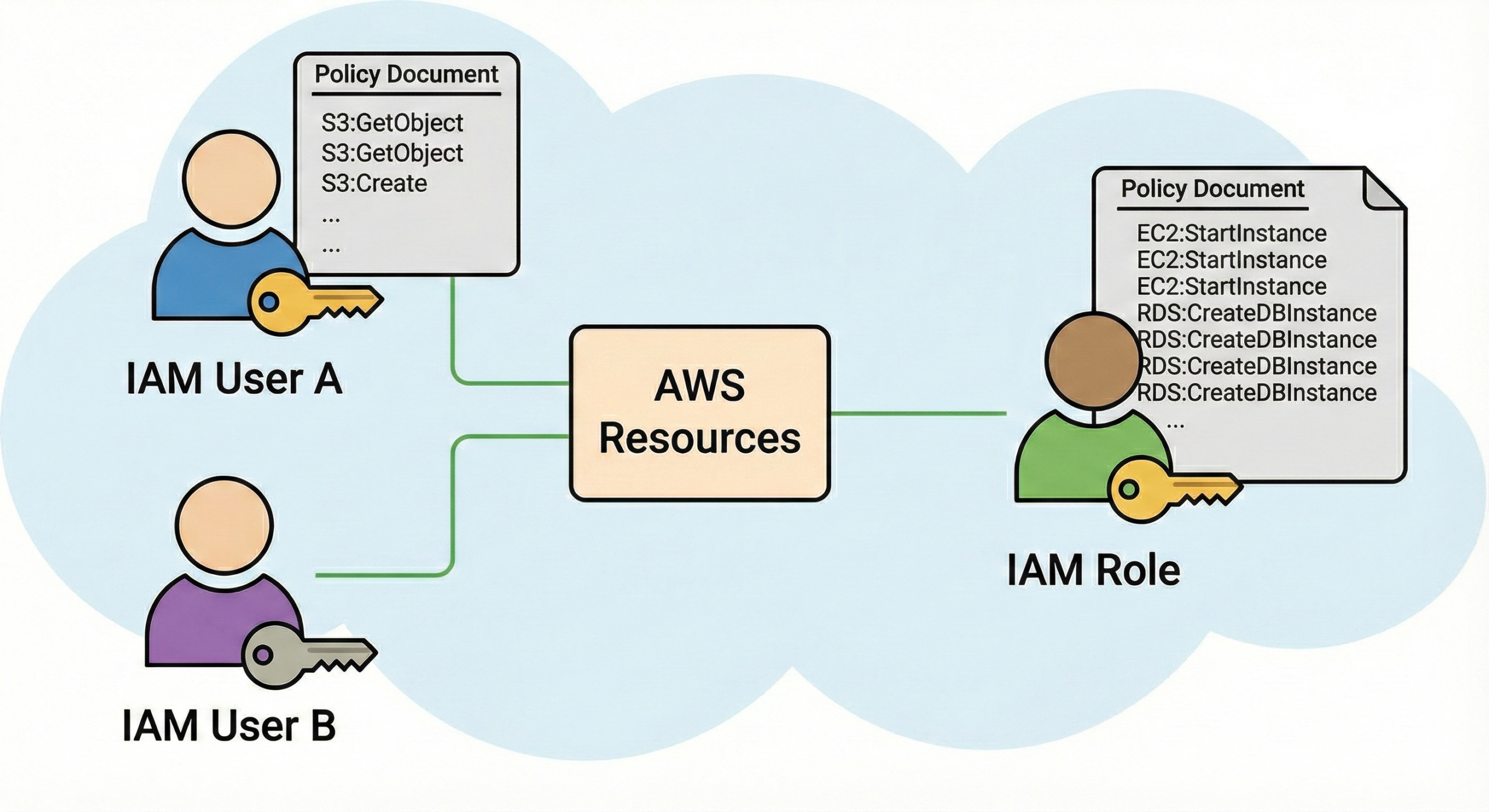
- Use PrivateLink & IAM: Use endpoint policies and IAM to limit which principals or resources can use endpoints.
CloudKnowledge provides practical troubleshooting and configuration patterns for enterprise networking on AWS. See their AWS Networking & Connectivity resource for patterns and examples.
13. Frequently Asked Questions (FQUs) & Keypoints — by Topic
General
Q: What happens if my VPC CIDR overlaps with another VPC? A: Overlapping CIDRs prevent VPC peering and many transit scenarios — best to plan non-overlapping addressing or use NAT/Proxy patterns to work around. Keypoint: plan CIDRs centrally via IPAM.
Subnets & Routing
Q: Why can’t my EC2 instance in a private subnet reach the internet? A: Common causes: missing NAT Gateway route in private subnet route table, missing NAT Gateway state (failed), or SG/NACL blocking. Use Reachability Analyzer and Flow Logs to confirm. Keypoint: NAT must be in public subnet with a route from the private subnet.
Security
Q: Which should I use: Security Group or NACL? A: Use Security Groups for most controls; NACLs for subnet-level restrictions and extra layer of defense. Keypoint: SGs are stateful, NACLs are stateless.
Connectivity
Q: When to pick Transit Gateway over Peering? A: Use Transit Gateway at scale (many VPCs, multi-region connectivity, central inspection/VPN). Use peering for a few direct VPC links. Keypoint: TGW supports scaling, propagation, and centralization.
Observability
Q: Do flow logs capture packet payload? A: No — Flow Logs capture metadata (IPs, ports, bytes, action). For payload-level analysis use Traffic Mirroring. Keypoint: flow logs are indispensable for metadata-level troubleshooting.
Endpoints
Q: Are VPC Endpoints free? A: Gateway endpoints (S3/DynamoDB) are free. Interface endpoints (PrivateLink) incur hourly and data processing charges. Keypoint: Gateway endpoints often save on NAT egress costs and are recommended for S3-heavy workloads.
14. Appendix — Useful Limits, Links & References
Quick limits to remember (subject to change)
- Default VPCs per region: 1 (you can create more).
- VPCs per region per account: soft limits (increase via support).
- NAT Gateways are AZ-scoped; plan one per AZ for HA.
Useful references
- AWS VPC docs — overview and features.
- AWS product page — Amazon VPC.
- CloudKnowledge — AWS Networking & Connectivity deep guide (peering vs TGW troubleshooting).
- CloudKnowledge — Amazon EFS article (links to VPC mount target patterns).
Hyperlinks to CloudKnowledge (SEO & internal linking)
Per your request, key terms below are hyperlinked to cloudknowledge.in resources so the blog benefits from your site links and SEO structure:



Anm"al dig f"or att fa 100 USDT
Thanks for sharing. I read many of your blog posts, cool, your blog is very good.